
Choosing Disloyalty
Or rather, loyalty with negotiation and conversation. And I'm at AWP!

I’ve been thinking about the word loyal.
I began writing this post a few weeks ago, as the Attorney General, Pam Bondi, testified before the Senate Judiciary committee. In the Epstein files released by the Department of Justice, names of perpetrators—of men—were protected (redacted), while survivors’ names were plainly visible. Several of these survivors were at the hearing. Bondi refused to look at them. When asked why none of the Epstein co-conspirators were being investigated, Bondi said the Dow Jones Industrial Average is over 50,000.
My girlfriend, Jill, says she is suspicious of relationships that value loyalty above all else—loyalty without negotiation and conversation. We were talking about relationships and politics, and the politics of relation.
When I was married, I never talked about the interpersonal dynamics of that relationship with my friends because my ex liked to “keep private things private.” Granted, she never said, Don’t talk about our marriage to others; as an attorney, she knew how to say things without technically saying them. She was very concerned about her public persona. She wouldn’t let me go to certain events because, she said, I “ruined her reputation.” I was too nice.
I write this now and it sounds absurd.
But I was loyal. I prioritized our relationship and wanted her to trust me.
No—I knew I was trustworthy. I prioritized our relationship and wanted to protect her. Her reputation.
I am beginning to understand how loyalty, when it cannot be questioned, is simply obedience dressed up as a virtue.
Loyal roots from the Old French loial from Latin legalis meaning “legal” or “according to the law.” Early uses of loyal were about conformity to the law, which meant fidelity to a king or sovereign. In feudal English, it denoted allegiance to authority.
Bondi performed loyalty. This is obvious, but bears repeating. Loyalty to a would-be king, who is referenced over 38,000 times in the Epstein files. Loyalty to rich men and their reputations. Loyalty to profit over people.
I have lived within this logic. What was my ex’s reputation for? (And this is why the revolution is also, always, a work of internal transformation.)
As a noun, loyal holds the word liege within its field. Liege is all about the relational bond between a “superior” and a “vassal.” A hierarchical relation written into the grammar. Loyals were liege subjects. In the OED, I read: “Loyal subjects, as opposed to disaffected persons.”
Disaffected. A refusal of false belonging.
Yet liege is a tricky word. It’s a contranym, sometimes also called an auto-antonym. For while liege refers to the loyal subjects (subordinates or servants), it also refers to a superior, i.e, my liege or lord. The contranym emerges from an earlier use; in feudal law, liege referred to a “free” man.
“For centuries kings, priests, feudal lords, industrial bosses and parents have insisted that obedience is a virtue and that disobedience is a vice.” So begins Erich Fromm’s “Disobedience as a Psychological and Moral Problem,” which we recently read for our book club. (Omaha people, you are welcome to join!) Fromm writes about the relationship between freedom and disobedience. There are, writes Fromm, the laws of the State and the laws of humanity, and sometimes, we must disobey the State in reverence of our own humanity or conscience, that which we know deeply to be right or wrong.
This is why Jill says loyalty requires negotiation and conversation. Which is another way of asking: loyal to what?
Because I believe language is alive, that words hold their ancestors within them, I think freedom still lurks, energetically and historically, within liege. Which reminds me of our earliest energies and desires, all that yearning and life force before it was covered over with trauma and culture, before we were guilted and shamed into giving our power away.
You cannot have subjection—or lording over— without a loss of freedom.
A longer quote from Fromm:
A person can become free through acts of disobedience by learning to say no to power. But not only is the capacity for disobedience the condition for freedom; freedom is also the condition for disobedience. If I am afraid of freedom, I cannot dare to say “no,” I cannot have the courage to be disobedient. Indeed, freedom and the capacity for disobedience are inseparable; hence any social, political, and religious system which proclaims freedom, yet stamps out disobedience, cannot speak the truth.
In the Christian authoritarian church of my youth, I was taught to constantly live, breath, and speak God—and that to do otherwise was willful, sinful, and wrong.
Loyal does not appear in the King James Version of the Bible.
Loyalty to power will always demand silence. Loyalty to conscience will not.
I have more to say, but it’s time for AWP. Years ago, I got married right before an AWP conference in Canada. At the time, gay marriage was still illegal in the United States, so we crossed the border. Thank God it was later legalized, so we could divorce. In Florida.
And thank the grand, funky She-God for helping me resist loyalty that requires my diminishment.
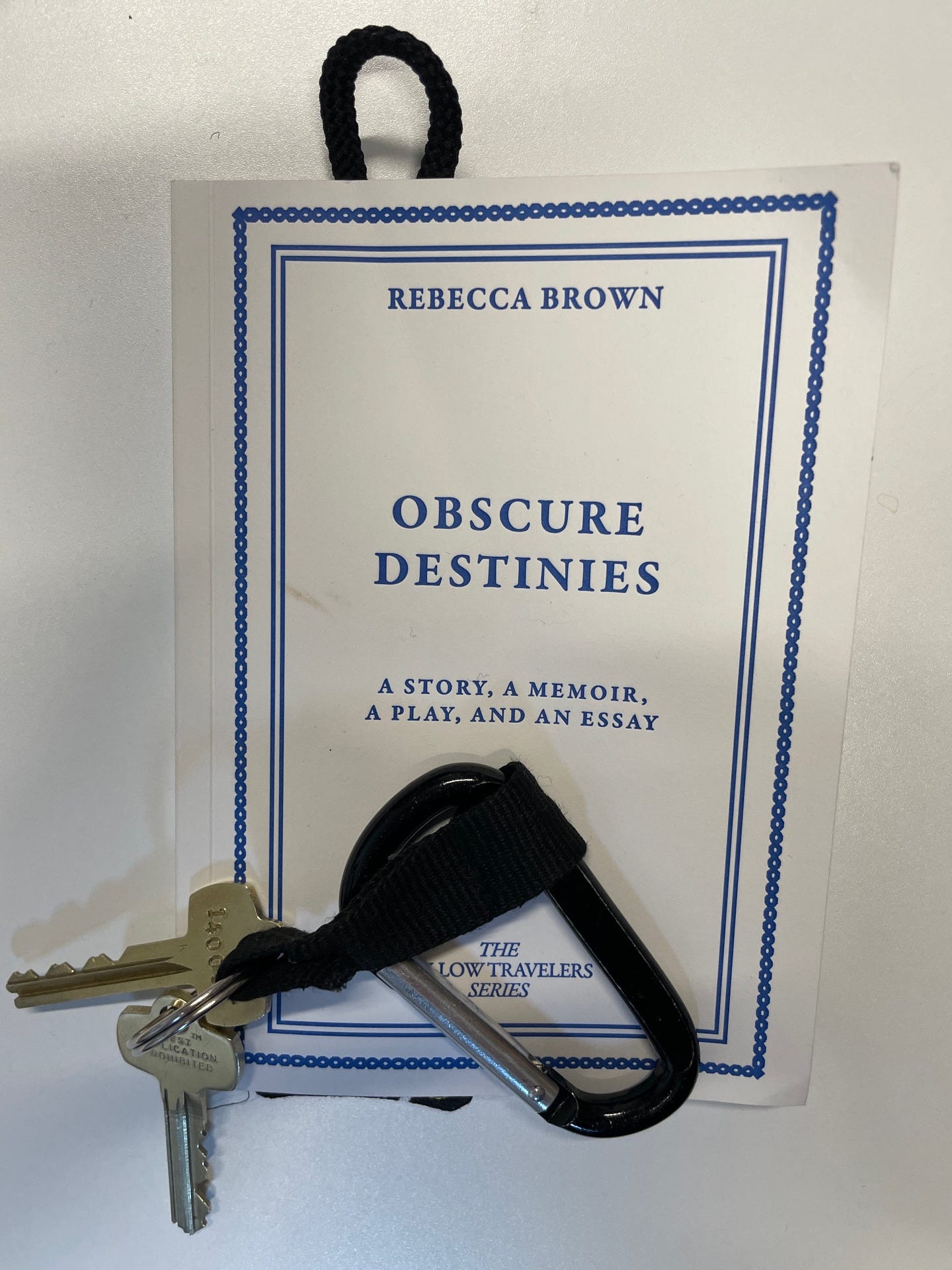
Prompt / Ritual: The process itself is often the content. I wanted to offer something in conversation with Rebecca Brown’s new book, Obscure Destinies: A Story, A Memoir, A Play, and an Essay. These are moving, often devastating pieces—about death and gratitude, friendship and language. The title comes from a Willa Cather book of the same name, and, as Brown notes in the final piece, Cather took it from Thomas Gray’s poem “Elegy Written in a Country Churchyard.”
So I performed bibliomancy (divination by book) with Brown’s Obscure Destinies and pointed to a blank page.
Of course, I realized: obscure destinies are the opposite of reputations.
So today, notice and breathe gratitude for the ordinary people around you—those whose actions, big or small, provide support, care, or grace. Be that person, too, for someone else.
Embrace your own obscure destiny.
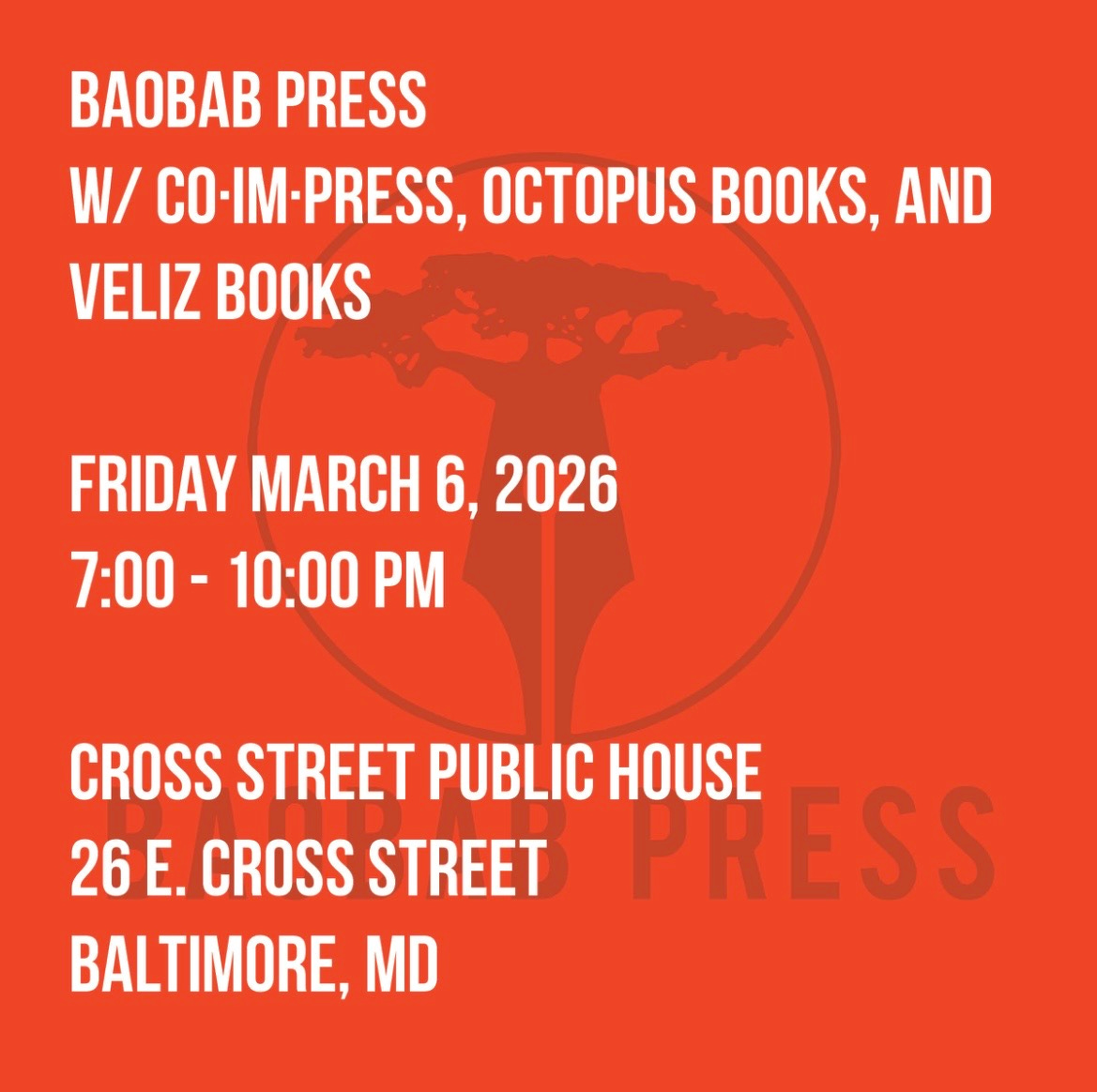
Oh yeah, AWP. You can find me at the Boabab Press table on Saturday morning. Or at this event on Friday night.
Unquestioning loyalty is indeed obedience. I never thought of it that way but it's so useful when considering loyalty within family dynamics. Incisive as always!